Understanding how are makeup brushes made in China requires more than watching bristles enter a metal ferrule. The process combines material selection, skilled assembly, machine trimming, and repeated quality checks. Many Chinese manufacturers produce brushes for private-label brands, professional artists, and everyday consumers. Their workshops may handle the complete process, from prototype design to packaging.
Production usually begins with synthetic fibers, natural hair, bamboo, wood, or molded plastic components. Technicians sort fibers by length, softness, density, and shape. Machines form the brush head, while workers inspect its symmetry by hand. The fibers are then secured inside a ferrule with adhesive, pressure, or both. Handles are painted, polished, printed, and attached before final trimming. A well-made brush should feel balanced, release minimal fibers, and keep its shape after repeated washing. Small details matter.
Quality control can include pull tests, visual inspection, dimension checks, odor assessment, and packaging reviews. Responsible factories also document materials and maintain traceability for each production batch. However, no factory is flawless. Color variation, uneven tips, or loose fibers can still appear during large orders. Buyers should request samples, review inspection records, and test washing performance before approving mass production. Supplier claims alone are not enough. A reliable evaluation considers workmanship, communication, manufacturing consistency, and product safety. This guide examines each stage carefully, while acknowledging that real production often involves compromises between price, speed, durability, and design.
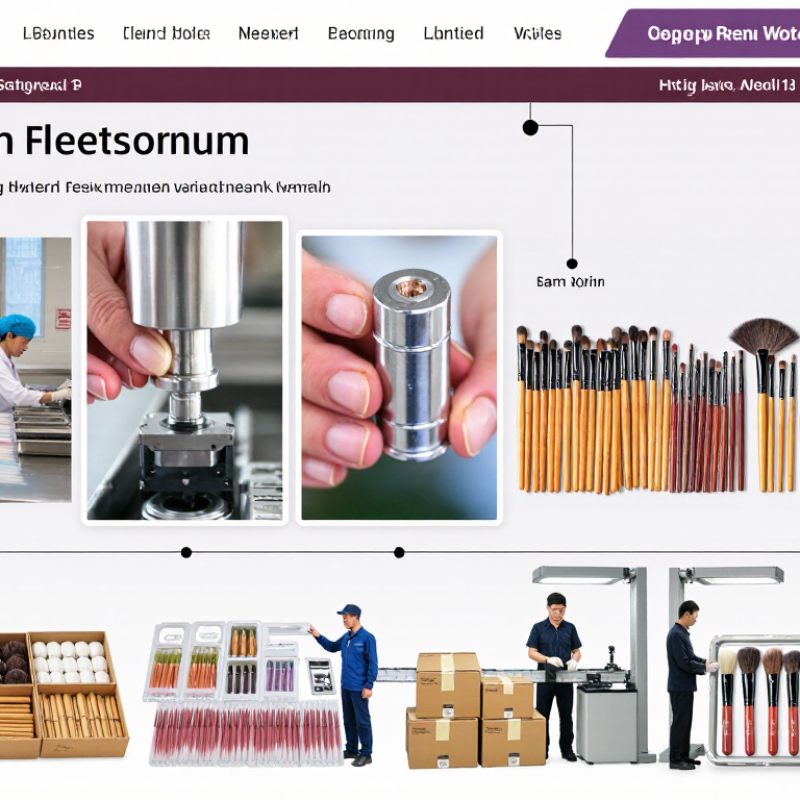
Chinese makeup brushes begin with a planned combination of fibers, ferrules, handles, and adhesives. Manufacturers commonly use synthetic PBT or nylon fibers for controlled softness and shape retention. Some product lines use natural hair, requiring careful sourcing, cleaning, and documentation. Fiber diameter changes the final feel. Shorter fibers usually create firmer application.
The ferrule connects the bristles to the handle. Aluminum is light and easy to form, while brass provides a heavier, more substantial feel. Surface finishes may include anodizing, painting, or plating, but adhesion testing remains essential. Handles can use wood, bamboo, acrylic, or injection-molded plastic. Each material needs different moisture and dimensional checks. A smooth handle can still split near the ferrule.
Small details matter. During practical quality inspections, pull tests, brush-shape checks, and loose-fiber counts reveal problems photographs cannot show. Adhesive selection also matters because excessive glue can harden the bristle base or create an odor. Reliable factories record batch numbers for fibers, ferrules, and handles.
Packaging may use paper sleeves, molded trays, or protective nets to prevent deformation during transport. Not every material succeeds. A soft fiber may lose its shape, while a durable handle may feel too heavy. Testing should reflect washing, drying, and repeated contact with cosmetic products. Factories that review these failures can improve the next production batch.
How Are Makeup Brushes Made in China?
Designing and Preparing Makeup Brush Components
A makeup brush begins with a practical design brief. The team defines its purpose, shape, size, softness, and target use. A powder brush needs a wider head, while an eyeliner brush requires tighter control. Designers usually prepare technical drawings and physical samples before production. Small changes matter. A two-millimeter difference can affect balance and application.
The bristles may use synthetic fibers or carefully selected natural hair, depending on the product requirements. Workers sort fibers by length, thickness, color, and flexibility. They then form the bundle and check its density by hand. The ferrule, usually made from aluminum or other suitable metal, must fit the bristle bundle evenly. Its inner surface needs clean edges. Otherwise, the handle connection may loosen during use.
Handles can be prepared from wood, plastic, or other approved materials. Each handle is shaped, polished, painted, and checked for surface defects. Assembly teams apply measured adhesive inside the ferrule, place the bristles, and allow sufficient curing time. Quality staff inspect alignment, shedding, odor, scratches, and repeated bending strength. From practical factory experience, the first sample is rarely perfect. A handle may feel too light, or the bristles may spread unevenly. That weakness should be recorded, not hidden, because reliable improvement depends on honest testing.
Shaping and setting the brush bristles requires controlled pressure, moisture, and repeated inspection. In Chinese brush factories, workers first sort synthetic filaments or natural hair by length, diameter, softness, and color. A forming machine then aligns the fibers inside a metal ferrule. Technicians tap the ferrule against a flat surface, creating the brush’s round, angled, or tapered profile. The shape must feel balanced, not merely look neat.
According to a 2024 Grand View Research analysis, the global makeup brush market is expected to grow steadily through 2030, supported by demand for professional and home-use tools. That growth increases pressure on factories to reduce shedding and uneven tips. After shaping, many manufacturers apply adhesive inside the ferrule and cure the brush under controlled conditions. ISO 22716 hygiene principles also encourage clean handling and traceable production records.
Quality teams perform pull tests, visual checks, and repeated brushing trials. A reliable brush should keep its silhouette after washing and drying. Still, the process is not perfectly uniform. One loose filament can escape a quick inspection. That is why experienced inspectors rotate each brush under bright light and check the edge by hand. Some factories record defect rates by production batch, although these records are not always explained clearly to buyers. The honest weakness is inconsistency: softness may vary slightly between batches, even when the design remains unchanged.
In China, makeup brush production often starts with handle preparation. Wooden, plastic, or aluminum handles are cut, polished, and checked for rough edges. Workers then apply coatings in controlled layers. Each handle must feel balanced, not merely look attractive. Small size differences can affect grip and application control.
The ferrule connects the handle with the brush head. It is usually shaped from aluminum or another suitable metal. Technicians place the bristle bundle inside the ferrule and secure it with adhesive. Pressure must remain even during assembly. Too much pressure can flatten the brush head. Too little may cause shedding during use.
Tips: Check the ferrule seam, handle alignment, and bristle density. Gently pull the hairs to detect weak bonding. A clean, mild scent is preferable. Strong chemical odors deserve further investigation. Packaging should protect the brush without compressing its shape.
Quality teams inspect finished brushes under bright lighting. They examine loose hairs, uneven trimming, surface marks, and coating defects. Some factories also test repeated bending and washing. These tests reveal weaknesses that visual checks may miss. However, no production line is perfect. Dust, minor scratches, or slight shape variation can still appear. Careful inspection reduces these problems, but honest reporting remains necessary.
Assembling Handles, Ferrules, and Brush Heads
Each finished makeup brush is assembled from three core components: one handle, one ferrule, and one brush head. During production, the handle is prepared, the ferrule is attached, and synthetic or natural bristles are inserted, bonded, shaped, and inspected before packaging.
Quality Control, Packaging, and Export Preparation
In Chinese brush factories, production usually begins with incoming material checks. Inspectors examine synthetic fibers, natural hair, handles, ferrules, and adhesive. They look for uneven color, loose strands, cracks, and unpleasant odors. Small defects matter. Workers then form each brush head by hand or with shaping equipment. The head must feel balanced, dense, and soft against the skin. Pull tests help measure whether fibers detach too easily. A visual check follows. Not every batch behaves perfectly, so inspectors often separate borderline pieces for review.
Quality control continues after assembly. Staff check handle length, ferrule alignment, logo placement, and overall weight against approved samples. A brush may look attractive but still shed during use. That weakness can appear only after repeated testing. Factories may conduct drop checks, cleaning tests, and packing simulations. Records should identify the operator, batch number, inspection date, and rejected quantity. Still, paperwork is not proof by itself. Random sampling can miss a hidden problem, especially when production volumes are high.
Packaging protects the brushes from dust, pressure, and moisture during export. Individual sleeves, recycled paper boxes, or molded trays keep bristles from bending. Cartons need clear markings, strong sealing tape, and accurate quantities. Export teams confirm dimensions, shipping documents, and destination requirements before loading. Desiccant may help in humid routes, but it must be handled responsibly. Carton corners are checked again. A rushed final inspection can undo careful factory work, which is why experienced teams leave time for corrections before shipment.
Synthetic PBT or nylon fibers are common. Some products use carefully documented natural hair. Handles may use wood, bamboo, acrylic, or molded plastic. Aluminum ferrules are light, while brass feels heavier. Material choice changes softness, balance, and durability.
Fiber diameter influences the feeling against skin. Shorter fibers usually create firmer application. Longer fibers can feel softer and spread product widely. A soft fiber may still lose its shape after washing. That possibility needs testing.
Workers sort fibers by length, thickness, color, and flexibility. They form a bundle and check its density by hand. Handles are shaped, polished, painted, and inspected. Ferrules need smooth inner edges. Rough edges can weaken the connection.
Workers place a measured amount of adhesive inside the ferrule. They insert the bristle bundle and attach the handle. The adhesive must cure long enough. Excess glue can harden the bristle base or create an odor. Small details matter.
Inspectors perform pull tests, shape checks, and loose-fiber counts. They also examine alignment, scratches, odor, and bending strength. Cleaning and drop tests may reveal hidden weaknesses. A brush can look fine and still shed later.
Records should identify the batch number, operator, inspection date, and rejected quantity. Materials should be traceable to their production batches. Paperwork helps, but it is not proof by itself. Random checks can miss problems.
Paper sleeves, protective nets, or molded trays help prevent bent bristles. Cartons need accurate quantities and strong sealing tape. Packaging should limit dust, pressure, and moisture. Carton corners deserve another check. Rushed packing can damage careful work.
A handle may feel too light, or bristles may spread unevenly. A smooth handle can still split near the ferrule. Adhesive may be excessive. Factories should record these failures instead of hiding them. Improvement depends on honest review.
How are makeup brushes made in China? The process begins with carefully selected materials, including synthetic or natural bristles, wooden or molded handles, metal or aluminum ferrules, and suitable adhesives. Manufacturers first design each component according to the brush’s intended function, then cut, shape, and prepare the bristles for smooth and consistent application. The bristles are arranged into bundles, aligned, and securely set with adhesive or mechanical pressure to create the desired density and shape.
Next, the brush head is fitted into the ferrule, which is attached firmly to the handle through pressing, bonding, or both. Each finished brush is inspected for shedding, uneven trimming, loose parts, surface defects, and overall balance. Approved products are cleaned, counted, labeled, and packed according to order requirements. Before export preparation, packaging strength, product specifications, and shipment documentation are checked to help ensure that the brushes arrive safely and consistently meet customer expectations.

Exio Beauty